
Authentic Trinitite Green Black Pearl 10.3 grams - Large
Brand : Jensan Scientifics LLC
- SKU:
- JPT-25887
- Condition:
- New
- Availability:
- Usually ships in 24 hours.
- Weight:
- 1.00 LBS
- Minimum Purchase:
- 1 unit
- Maximum Purchase:
- 1 unit
- Shipping:
- Calculated at Checkout


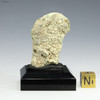

Authentic Trinitite Green Black Pearl 10.3 g Large Atomic Glass
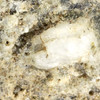
This large 10.3-gram Trinitite specimen is authentic atomic glass formed during the Trinity test on July 16, 1945, near Alamogordo, New Mexico. Legally collected in 1948, this green with black specimen has a granular natural surface, subtle black melt contrast, and a rare pale pearl-like embedded glass shard visible in the mid-zone.
Trinitite 10.3 g Geological Context and Significance
Trinitite is fused desert sand formed by the extreme thermal and pressure conditions of the first atomic bomb test. This specimen preserves a direct material record of the Trinity test, the July 16, 1945, event that marked the beginning of the atomic age.
Unlike ordinary glass, Trinitite formed in a complex open-air detonation environment that included desert sand, steel tower material, copper-bearing components, indigenous minerals, and rapidly quenched melt. The result is a historically significant anthropogenic glass with distinctive color, texture, and compositional variation.
This example is especially appealing because it combines large size, green-black visual contrast, and a rare pale pearl-like embedded glass shard. The embedded feature gives the specimen a specific visual focal point rather than presenting only as a generalized piece of fused sand.
Pearl-Like Feature in This Trinitite Specimen
A rare, pale pearl-like embedded glass shard is visible in the mid-zone of this specimen. Under 5x magnification, the feature shows a smooth, light-toned glassy surface with softened margins, sharply contrasting with the surrounding granular green-gray fused-sand matrix.
The feature is best described as a pearl-like embedded glass shard rather than a separate mineral crystal. It appears visually distinct because its light color, smooth surface, and rounded, softened edges stand apart from the rougher surrounding Trinitite texture.
Trinitite Specimen Description
This authentic large Trinitite specimen is green and black with a rough, irregular form consistent with genuine blast-formed atomic glass. The surface is naturally granular, and the black melt area adds subdued contrast without overwhelming the specimen's green-gray body.
The specimen has a strong display profile for its size class, measuring 45 mm L x 29 mm W x 10 mm D and weighing 10.3 grams. The rare embedded pearl-like feature adds an unusual focal point for collectors, educators, and historical science displays.
| Object Type | Authentic Trinitite atomic glass specimen |
| Locality | Trinity test area, near Alamogordo, New Mexico, USA |
| Historical Formation | Formed during the first atomic bomb test on July 16, 1945 |
| Collection History | Legally collected in 1948 |
| Dimensions | 45 mm L x 29 mm W x 10 mm D |
| Weight | 10.3 grams |
| Specimen Description | Large green and black Trinitite with granular natural surface, rough, irregular form, subtle black melt contrast, and a rare pale pearl-like embedded glass shard visible in the mid-zone |
| Distinctive Feature | Rare pale pearl-like embedded glass shard visible under magnification |
| Scientific Significance | Historic atomic glass formed during the Trinity test, preserving a material record of the first nuclear detonation |
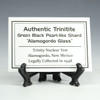
| What Is Included | Certificate of Authenticity, XRF analysis, tag, tag stand, and Trinitite information |
| Use and Display | For scientific, historical, educational, and private collection display only |
| Authentication and Compliance | Guaranteed authentic; intended for educational and scientific purposes. Do not inhale, ingest, or wear as jewelry |
| Shipping | Shipping calculated at checkout |
| U.S. Shipping | Free Priority Shipping within the USA |
Images professionally photographed under controlled studio lighting using Zeiss optics and a pro-grade Canon camera.
Rarity & Significance
Scientific Significance: ★★★★★
Market Availability: ★
Locality Specificity: ★★★★★
Display Appeal: ★★★★★
Questions Commonly Asked About This Trinitite Specimen
Why is the pale embedded feature important?
The pale embedded feature gives this specimen a distinct visual identity. Rather than being a uniform fragment of green atomic glass, this Trinitite contains a light-toned, pearl-like glass shard set within the darker granular fused-sand matrix.
Is the pearl-like feature a separate added material?
No. The pearl-like feature is described as an embedded glass shard visible within the specimen. Its softened margins and placement in the Trinitite matrix are consistent with a naturally incorporated melt feature during the blast, rather than a later addition.
Why does this specimen have both green and black areas?
The green body reflects the fused desert-sand glass most commonly associated with Trinitite. The darker black areas are related to more complex melt chemistry and iron-bearing material present in the Trinity test environment.
Why is 10.3 grams notable for Trinitite?
Many authentic Trinitite specimens available to collectors are small, thin fragments. This 10.3-gram specimen has a stronger display presence and provides more surface area for observing texture, color variation, and embedded melt features.
How should this trinitite be handled?
This Trinitite is intended for scientific, historical, educational, and private collection display only. It should not be inhaled, ingested, ground, polished, altered, or worn as jewelry.
Add this large 10.3-gram Trinitite specimen to a serious scientific or historical collection while it remains available.
This large green-black Trinitite preserves a rare material witness to the Trinity test and the formation of atomic glass. Its 10.3-gram size, documented 1948 collection history, XRF support, and pale pearl-like embedded glass shard give it unusual scientific, historical, and visual appeal.


