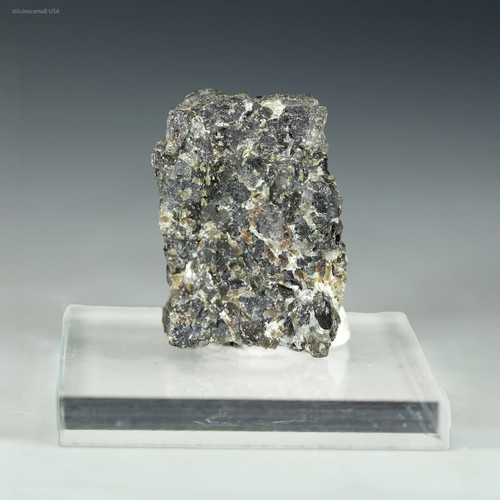
Big Hole Kimberlite - Kimberley, South Africa - 89g
Brand : Sciencemall-USA
- SKU:
- JPT-82138
- Condition:
- New
- Availability:
- Usually ships in 24 hours.
- Weight:
- 1.00 LBS
- Minimum Purchase:
- 1 unit
- Maximum Purchase:
- 1 unit
- Shipping:
- Calculated at Checkout


Rare Big Hole Kimberlite South Africa
Authentic material from this world-famous locality is increasingly difficult to acquire since the mine's closure over a century ago. This specimen represents a premier acquisition for any serious mineral collection or display of world-class mining heritage.
Kimberlite Rock Specimen from the Big Hole Mine
This kimberlite specimen came from the renowned, now-closed open-pit mine in Kimberley, South Africa. Excavated during the late nineteenth and early twentieth centuries, the Big Hole stands as one of the most ambitious hand-dug mining projects ever undertaken.
Known as the second-largest hand-excavated hole, this specimen holds immense historical value. Between 1871 and 1914, approximately 50,000 miners dug tirelessly with picks and shovels, unearthing an astounding 6,000 pounds of diamonds. This rock serves as a tangible reminder of the remarkable mining achievements of that era.
Kimberlite's Geological Importance
Kimberlite is a volatile-rich igneous rock best known as the primary host of natural diamonds. The rock takes its name from Kimberley, South Africa, a settlement originally known as New Rush that rapidly developed following major diamond discoveries in the late 1860s. In 1869, the discovery of the Star of South Africa diamond triggered an influx of prospectors and the large-scale excavation that would become the Big Hole.
Kimberlite pipes form through explosive volcanic processes known as diatreme volcanism, originating deep within Earth’s mantle. These eruptions create steep, vertical columns of fragmented rock that transport mantle material rapidly to the surface, preserving mineral assemblages formed under extreme pressure.
Mineral Composition
This kimberlite specimen displays a characteristic mineral assemblage that may include ilmenite, chromite, and garnet. Visible olivine crystals are present, representing some of the earliest minerals to crystallize from kimberlite magmas and providing direct evidence of the rock's deep-mantle origin.
Beginning of the Diamond Trade in South Africa
This kimberlite is associated with the rich history of the diamond trade in South Africa. Big Hole was a vast excavation carved by human labor during the late nineteenth century at the height of the diamond rush. Worked by thousands of miners with hand tools, ropes, and simple lifting gear, the Big Hole emerged as an early testing ground for large-scale mining methods and helped shape the structure of the modern diamond industry.
| Object Type | Kimberlite rock specimen |
| Locality | Big Hole Mine, Kimberley, South Africa |
| Dimensions & Weight | 86 mm × 65 mm × 8 mm; 89 grams |
| Specimen Description | Green-gray serpentinized matrix with a brecciated fabric, showing dark angular fragments, pale ovoid inclusions, and rounded green grains of altered olivine; mixed textures reflect classic carrot-shaped kimberlite pipe movement from deep within the mantle; stable, no repairs |
| Scientific Significance | Kimberlite is a volatile-rich igneous rock originating from deep within Earth's mantle and is the primary host rock for diamonds. Specimens from the Big Hole document early large-scale kimberlite mining and preserve mineral assemblages formed under extreme pressure. |
| What Is Included | Certificate of Authenticity; printed informational sheet; specimen tag and tag display stand; XRF analysis documentation |
| Use & Display | Educational reference; private geological collection; museum-style display, Diamond mining, Geology of South Africa, Africa Kimberlites |
| Authentication & Compliance | Legally collected prior to 1980; authenticated by Sciencemall-USA |
| Shipping | Shipping calculated at checkout, Free priority shipping in the USA |
| U.S. Shipping | Free Priority Shipping within the USA |
The Big Hole was the centerpiece of the De Beers Consolidated Mines empire. Formed in 1888 by Cecil Rhodes and Barney Barnato. De Beers used this single location to consolidate their power, eventually controlling nearly 90% of the world's diamond production for decades.
The Kimberley Mine produced some of history's most legendary gems, including the 616-carat "Kimberley Octahedron" (the largest naturally formed octahedral diamond crystal ever found) and the world-renowned Tiffany Yellow Diamond, which was discovered there in 1877.
Before the Kimberley strike, diamonds were mostly found in riverbeds. The Big Hole proved that diamonds were "piped" up from the Earth's mantle in Kimberlite pipes. This specific rock—known as "Blue Ground"—is the volcanic engine that carried diamonds from 150km deep to the surface.
Under De Beers' leadership, 50,000 miners excavated 22.5 million tons of earth by hand using only picks and shovels. They recovered approximately 14.5 million carats (6,000 lbs) of diamonds, creating the largest hand-dug excavation on the planet.
Hold the Legacy of the First Diamond Rush: Kimberlite "Big Hole"
This Kimberlite specimen is a tangible piece of the "Greatest Hole on Earth." It is a fragment of the high-stakes era that birthed the De Beers monopoly and provided the world with its most iconic treasures. Own the rock that changed the world's economy and the science of geology forever.